Before the Heat Sets In: How Smart STR Investors Are Using May Right Now
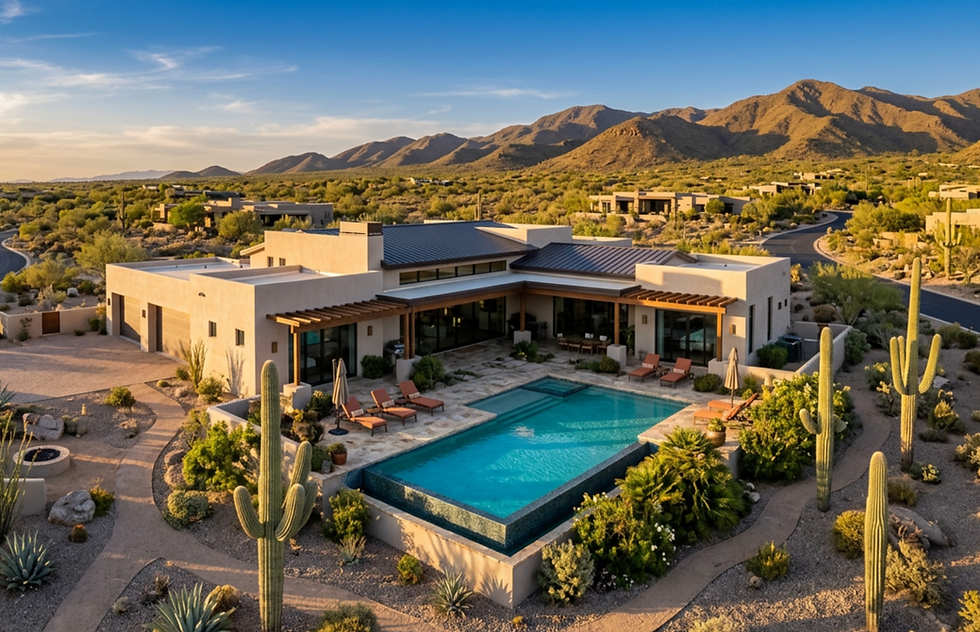
March was good. If you own a short-term rental in Scottsdale, you probably already know that—the data backs it up. Occupancy across the market hit 72.6% in March 2026, with average daily rates climbing to $467, up nearly 12% from the same time last year. The spring season delivered.
But May is a different kind of month. The golf tournaments are done. Spring break is a memory. The summer heat is still a few weeks out, and occupancy is in a brief, oddly useful lull before July and August drive rates lower. That window—right now—is one of the most underused stretches in the STR investor calendar.
What the Numbers Actually Say
The Scottsdale STR market is, in the aggregate, performing well. March 2026 RevPAR hit $339, up from $279 a year ago. Year-over-year occupancy has climbed more than ten percentage points. Best-in-class properties—the top 10% of listings—commanded $706 or more per night during peak periods this spring.
The shadow side of that picture is summer. July and August regularly see occupancy fall into the 48–55% range. That’s not a crisis—it’s a known feature of the desert market. But it’s also the reality that separates well-managed portfolios from underprepared ones. Investors who treat summer as an afterthought tend to feel it. Investors who treat May as a planning month don’t.
The Pre-Summer Checklist That Actually Matters
There’s a predictable list of things that go wrong in summer STR properties—and most of them are avoidable with a little attention now.
HVAC is the obvious one. A unit that ran fine through February and March can struggle when temperatures hit 110°F. A same-day HVAC failure in July means a displaced guest, a bad review, and an emergency repair bill at peak-season labor rates. Scheduling a service visit in May, before the seasonal rush on HVAC companies, is one of the clearest cost-benefit decisions a Phoenix-area STR investor can make.
The other side of pre-summer planning is pricing strategy. The best operators in this market don’t lower summer rates across the board—they get precise. Scottsdale’s summer demand isn’t zero; it’s just different. Staycationers, extended business travel, local relocation guests, and visitors who specifically want the desert experience all represent real occupancy. Dynamic pricing tools work harder when they’re calibrated going into summer, not after bookings stall.
At BonVoyageAZ, we run a property-by-property summer review each May—looking at what drove bookings last year, where rates were left too high or too low, and which properties have maintenance items worth resolving before July heat tests them. The properties that do this work now consistently outperform through the slower months.
The ADU Rule Change Worth Knowing
If you’re evaluating an accessory dwelling unit addition—or if you’ve recently built one—there’s a regulatory change that took effect April 4, 2026, that directly affects short-term rental plans.
Under the new rule, if you apply to operate an STR on a property that has an ADU with a certificate of occupancy issued on or after September 14, 2024, the property owner must submit a notarized attestation confirming they reside on that same property, with proof of address. This is a meaningful shift from prior practice.
The ADU opportunity itself isn’t gone. Arizona still mandates that every county permit ADUs on residentially zoned lots, and the revenue potential of a well-placed unit remains compelling. But non-owner-occupied STR strategies on newer ADU properties now carry compliance risk that wasn’t there before. Any acquisition with a post-September 2024 ADU deserves a compliance review before closing.
What We’re Watching This Summer
The Scottsdale market has absorbed significant new inventory over the past few years—4,331 active listings as of early 2026—and while demand metrics are strong, the properties that consistently outperform are the ones with operational precision: responsive management, proactive maintenance, calibrated pricing, and a genuine guest experience. The gap between median and top-quartile performance isn’t closing.
Summer will tell a lot about which properties in this market are positioned for the long term. May is when that positioning happens.